Feeding
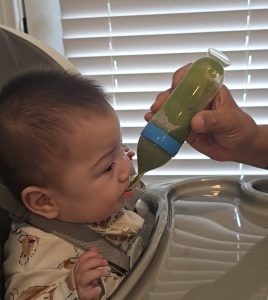
Dr. Guerra has advanced training in multiple evidence-based feeding approaches, allowing her to thoughtfully individualize intervention by integrating a range of strategies tailored to each child’s unique needs. Therapy targets are selected to support safe feeding, swallowing function, and nutritional intake while supporting the child’s developmental readiness and family priorities.
A central focus of intervention is collaboration with families to assist in texture progression and food acceptance in ways that are realistic and sustainable within everyday family mealtimes. Parents and caregivers are actively coached to carry over therapy strategies into natural feeding routines throughout the child’s day.
Feeding therapy sessions are designed to be safe, responsive, and relationship-based, emphasizing trust and positive interactions between the child, parent/caregiver, and therapist. Progress is measured not solely by increases in caloric intake or texture tolerance, but by the child’s comfort, participation, and growing confidence in their feeding skills.
Augmentative and Alternative Communication (AAC) Focused
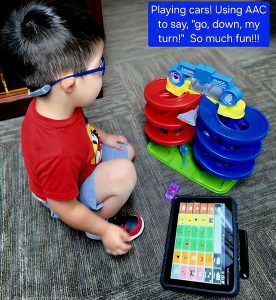
Dr. Guerra provides individualized AAC therapy focusing on a total communication approach. Interventions are designed to support each child’s ability to communicate effectively across a variety of settings, combining speech, gestures, signs, and low- or high-tech AAC systems based on the child’s unique strengths and needs.
Therapy emphasizes functional, real-world communication and is always family-centered and culturally responsive. Families are actively involved in goal setting and are coached to implement AAC strategies throughout daily routines, promoting consistency, independence, and meaningful participation.
AAC sessions focus on:
- Fostering communication skills that reflect the child’s strengths and interests
- Identifying access to and use of AAC tools across home, school, and community environments that aid in natural communication exchanges
- Training parents/caregivers, siblings/cousins, and other professionals involved with the child’s plan of care to model and reinforce authentic communication
- Discovery of flexible, multimodal communication for the child’s social, academic, and daily-life interactions
- Measuring progress through the child’s engagement, participation, confidence, and enjoyment
Dr. Guerra’s AAC therapy is guided by evidence-based practices and anchored on the principle that every child can communicate effectively when given the right support, tools, and opportunities.
Speech and Language
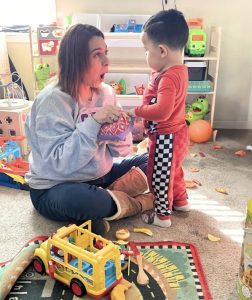
Building on the findings of a comprehensive evaluation, Dr. Guerra provides individualized speech and language therapy that is strengths-based, functional, and child-centered. Therapy targets are designed to enhance the child’s existing communication skills while addressing areas of need, fostering meaningful interactions across home, school, and community settings. Evidence-based protocols and strategies guide intervention strategies during the speech therapy sessions.
Visits are engaging, developmentally appropriate, and often incorporate play-based and motivating activities to support skill development in speech production, language comprehension and expression, social communication, and cognitive-linguistic abilities. Families and caregivers are actively involved, learning strategies to reinforce skills throughout daily routines, promoting carryover, confidence, and participation.
Dr. Guerra’s approach emphasizes positive, meaningful therapy interactions that develop both communication abilities and the child’s sense of confidence in everyday interactions.